
 By Kenneth Marcos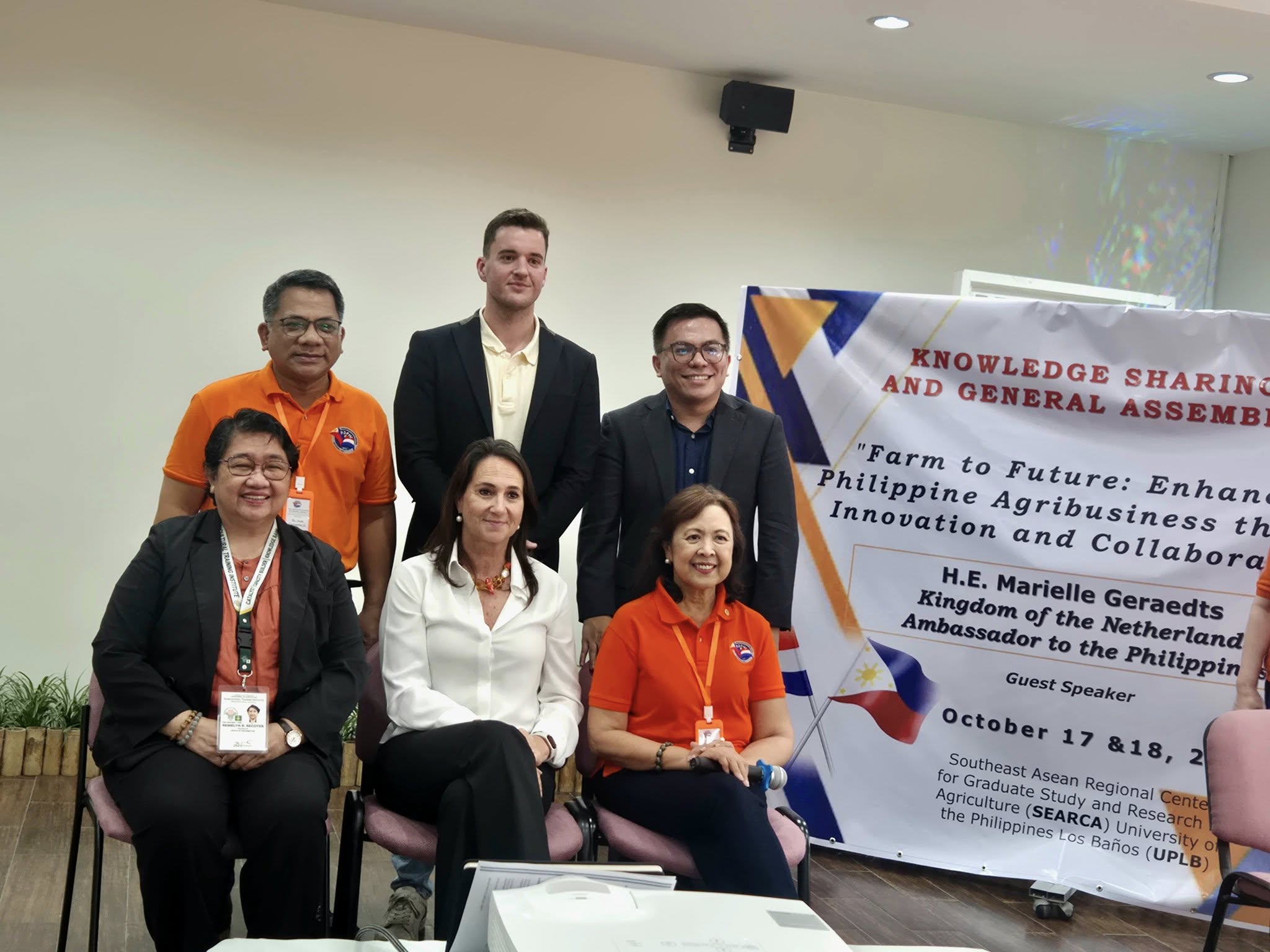
On a bright October morning in Los Baños, a group of farmers, agri-leaders, and international experts gathered under one roof, sharing one goal: to uplift Philippine agriculture through modern, inclusive, and sustainable practices.
Agricultural Training Institute (ATI) Director Remelyn R. Recoter spoke at the 2025 General Assembly of the Philippine-Dutch Fellows Network, Inc. (PDFNI), highlighting new technologies aimed at helping small and medium-scale farmers adapt to the changing agricultural landscape. Held at the SEARCA Residence Hotel inside the University of the Philippines Los Baños (UPLB), the event runs until October 18, 2025.
Director Recoter emphasized the ATI’s key programs that respond to issues faced by farmers and fishers today—such as climate change, limited access to markets, and outdated techniques. Her message: technology and knowledge sharing can bridge the gap between traditional farming and modern agribusiness.
“This is about making agriculture inclusive,” Recoter said. “We need to equip our farmers with the right tools and training so they can grow more, earn more, and thrive in a competitive market.”
The assembly brought together alumni of various Dutch-funded agricultural programs. Many of them trained in the Netherlands through scholarships and now serve as leaders or advocates for agricultural innovation in their communities.
A highlight of the gathering was the ceremonial presentation of a new variety of Hibiscus rosa-sinensis—named in honor of Her Excellency Marielle Geraedts, the Netherlands’ Ambassador to the Philippines. The flower symbolizes the strong partnership between the two countries in agricultural development.
The event also featured several learning sessions, including a talk by Mitchel Smolders of the Dutch Chamber of Commerce in the Philippines. He discussed Dutch technologies that can be applied to local farming, such as precision farming, greenhouse systems, and efficient water use. These innovations have long helped the Netherlands remain one of the world’s top food producers despite having limited land.
Nanya Burki, Director of NUFFIC Southeast Asia, supported the importance of continued education and partnership to modernize Philippine farming systems.
Dr. Rico Ancog, speaking on behalf of SEARCA Director Mercedita Sombilla, also tackled the need for stronger regional strategies in agriculture—especially in light of trade competition within Southeast Asia. His message centered on preparing Filipino farmers to meet both local and international demands.
PDFNI, now led by former ATI Director and ITCPH Center Director Dr. Mary Ann P. Sayoc, continues to serve as a platform for knowledge-sharing and capacity building. Its members work in various sectors—from government and NGOs to agribusiness and rural cooperatives—bringing back insights from the Netherlands to improve Philippine agriculture.
As the assembly closes, the message is clear: innovation must not stay in classrooms or labs. It must reach the fields, the farmers, and the future generations who will carry on the vital work of feeding the nation.
Pwersa Balita – Your Trusted Source in Agri News