
 By Kenneth Marcos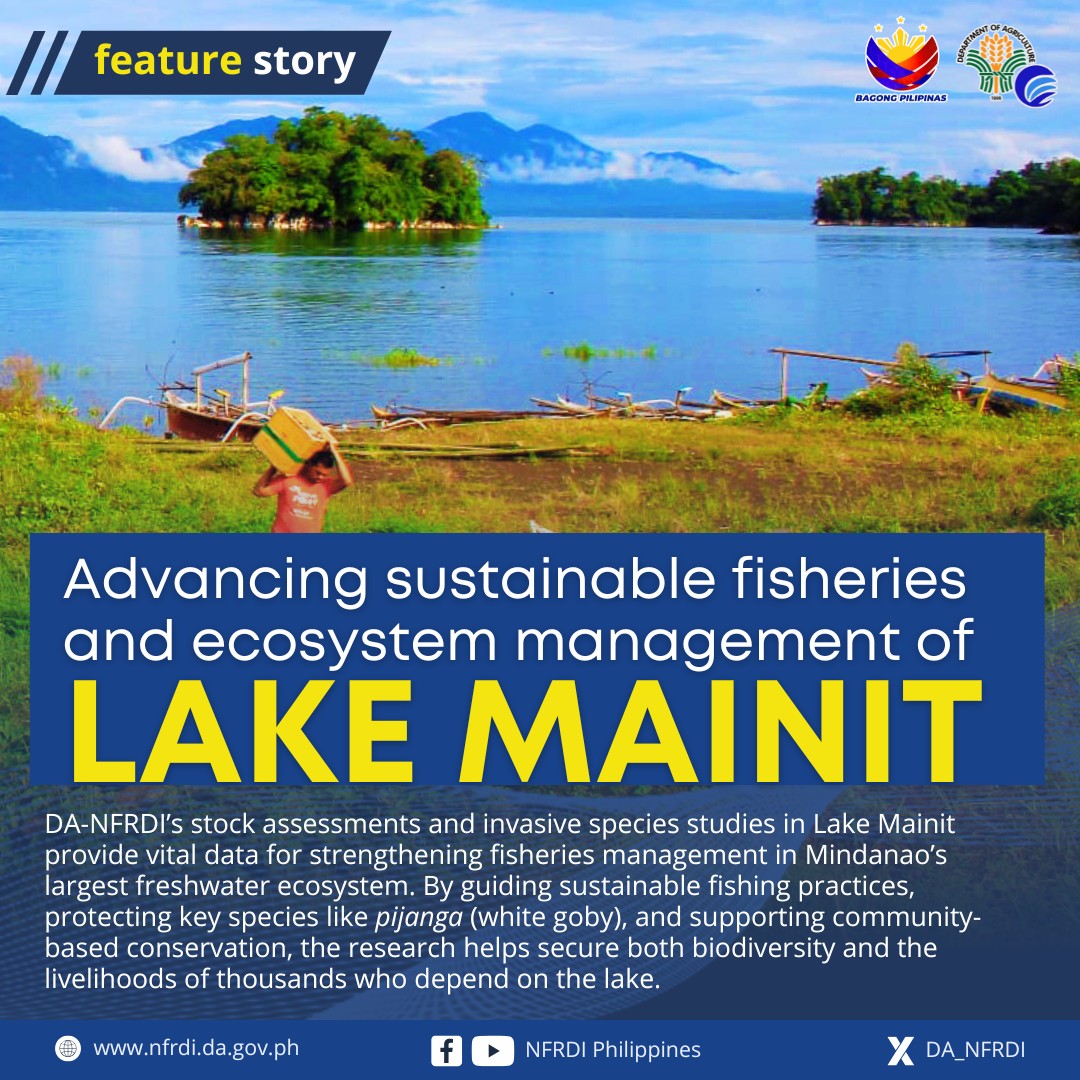
As the early morning mist rises over Lake Mainit, fishermen cast their nets with hope — for food, for income, and for the future of their families. But in recent years, catching enough fish has become harder, and both the lake and its people are feeling the strain.
To help protect this vital resource, the Department of Agriculture – National Fisheries Research and Development Institute (DA-NFRDI) has intensified its scientific efforts through stock assessments and invasive species research in Lake Mainit, the largest freshwater lake in Mindanao.
These studies aim to improve fisheries management, protect endangered native fish like the pijanga (white goby), and guide communities in adopting sustainable fishing practices. With more than 25,000 residents around the lake depending on fishing and related activities, the research is seen as a key step toward balancing conservation and livelihood.
According to DA-NFRDI, one major challenge facing Lake Mainit is the growing pressure on fish populations due to overfishing, habitat degradation, and the presence of invasive species. Invasive fish — often introduced unintentionally or for aquaculture purposes — compete with native species for food and space, threatening the lake’s natural balance.
The institute’s stock assessment studies measure the number and health of fish in the lake, helping experts recommend catch limits and identify breeding grounds that need protection. This data allows both local governments and fisherfolk to make better decisions about when, where, and how to fish.
Meanwhile, invasive species monitoring helps track non-native fish that disrupt the ecosystem. Removing or controlling these species can help native fish like pijanga recover and thrive.
The pijanga is one of Lake Mainit’s most culturally and economically important fish. Locals rely on it not just for food but also as a source of income in markets across Agusan del Norte and Surigao del Norte. Its decline in recent years has raised alarms among both scientists and communities.
DA-NFRDI is working closely with local fishers, community leaders, and the Bureau of Fisheries and Aquatic Resources (BFAR) to ensure that science-based solutions reach the grassroots. Among the strategies being implemented are community-led conservation zones, seasonal fishing closures, and awareness campaigns about invasive species.
The goal is simple but urgent: to make sure that Lake Mainit continues to feed and support families for generations to come.
Fisheries management is not just about protecting fish — it’s about protecting lives, traditions, and the environment. With the help of research and cooperation on the ground, Lake Mainit could once again become a model of sustainable inland fisheries in the Philippines.
Pwersa Balita – Your Trusted Source in Agri News