
 By Kenneth Marcos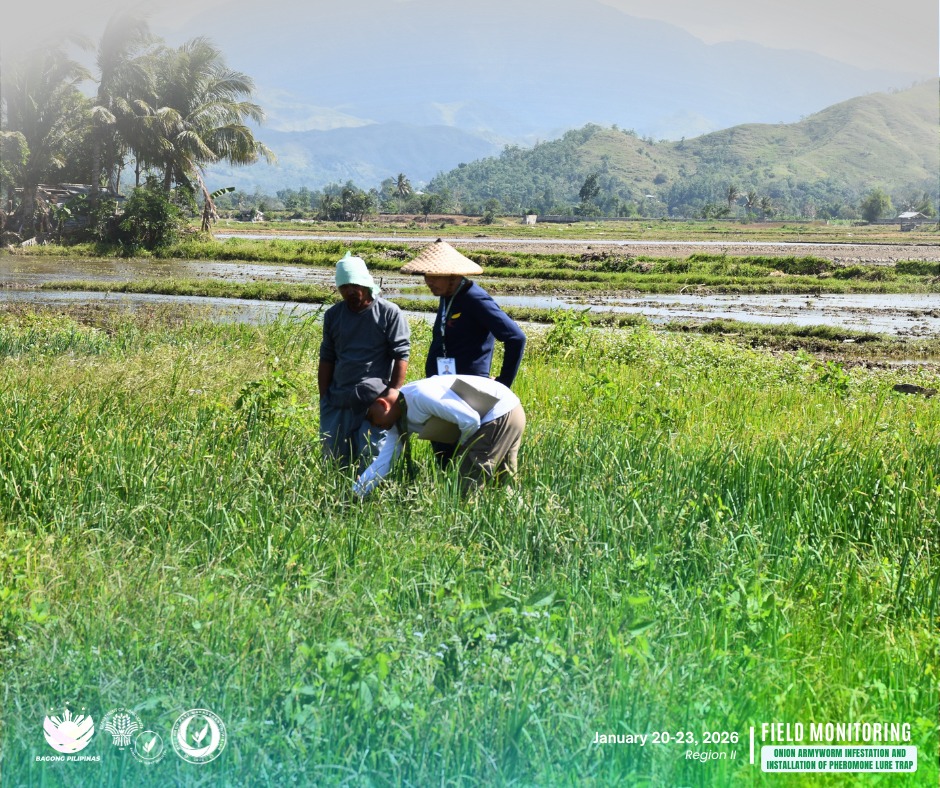
Before sunrise, onion farmers in Nueva Vizcaya walk through their fields, checking leaves for signs of damage that could wipe out weeks of hard work. For many, the sight of chewed plants brings worry, as pest outbreaks can quickly cut harvests and income. This concern pushed government teams to act early in January.
From January 20 to 23, 2026, the Bureau of Plant Industry’s Crop Pest Management Division led field monitoring and validation activities to assess onion armyworm infestation in parts of Region II. The operation covered the towns of Aritao, Bambang, and Dupax del Sur in Nueva Vizcaya, key onion-growing areas in the province.
The activity was carried out in coordination with the Municipal Agriculture Offices, the Regional Crop Protection Center II, and the Department of Agriculture’s Nueva Vizcaya Experimental Station. Teams inspected onion farms to confirm the presence and extent of armyworm damage, while also gathering field data to guide immediate and long-term pest control measures.
Onion armyworm is a serious threat to vegetable crops. Its larvae feed aggressively on onion leaves, reducing plant growth and bulb development. If left unmanaged, infestations can lead to significant yield losses, higher production costs, and lower farm income. For small farmers, even minor losses can affect their ability to recover expenses for seeds, fertilizer, and labor.
To help control the pest, government teams installed pheromone lure traps in affected and high-risk areas. These traps attract adult moths, allowing farmers and technicians to monitor pest population levels. Early detection helps determine when intervention is needed and reduces the use of unnecessary or excessive pesticides.
Officials said pheromone traps are an important part of integrated pest management. They are safe, cost-effective, and environmentally friendly. By relying on monitoring tools rather than routine spraying, farmers can protect crops while also reducing risks to human health, beneficial insects, and the surrounding environment.
During the field visits, farmers were also advised on proper crop management practices. These include regular field inspection, timely removal of infested plants, proper spacing, and balanced fertilizer use. Farmers were reminded to coordinate closely with their local agriculture offices if they observe sudden increases in pest activity.
The Department of Agriculture said the monitoring activity reflects the government’s push to strengthen early warning systems for crop pests. Climate change and shifting weather patterns have increased the risk of pest outbreaks in many farming areas. Proactive field validation helps authorities respond faster and limit damage before infestations spread.
Nueva Vizcaya plays a key role in the country’s onion supply, especially during peak harvest seasons. Protecting crops from pests like armyworm is critical to maintaining stable supply and preventing sharp price increases in local markets.
As the planting season continues, agriculture officials urged farmers to remain alert and work closely with government technicians. Timely reporting and coordinated action, they said, are vital to keeping onion farms productive and ensuring food supply for Filipino households.
Pwersa Balita – Your Trusted Source in Agri News