
 By Kenneth Marcos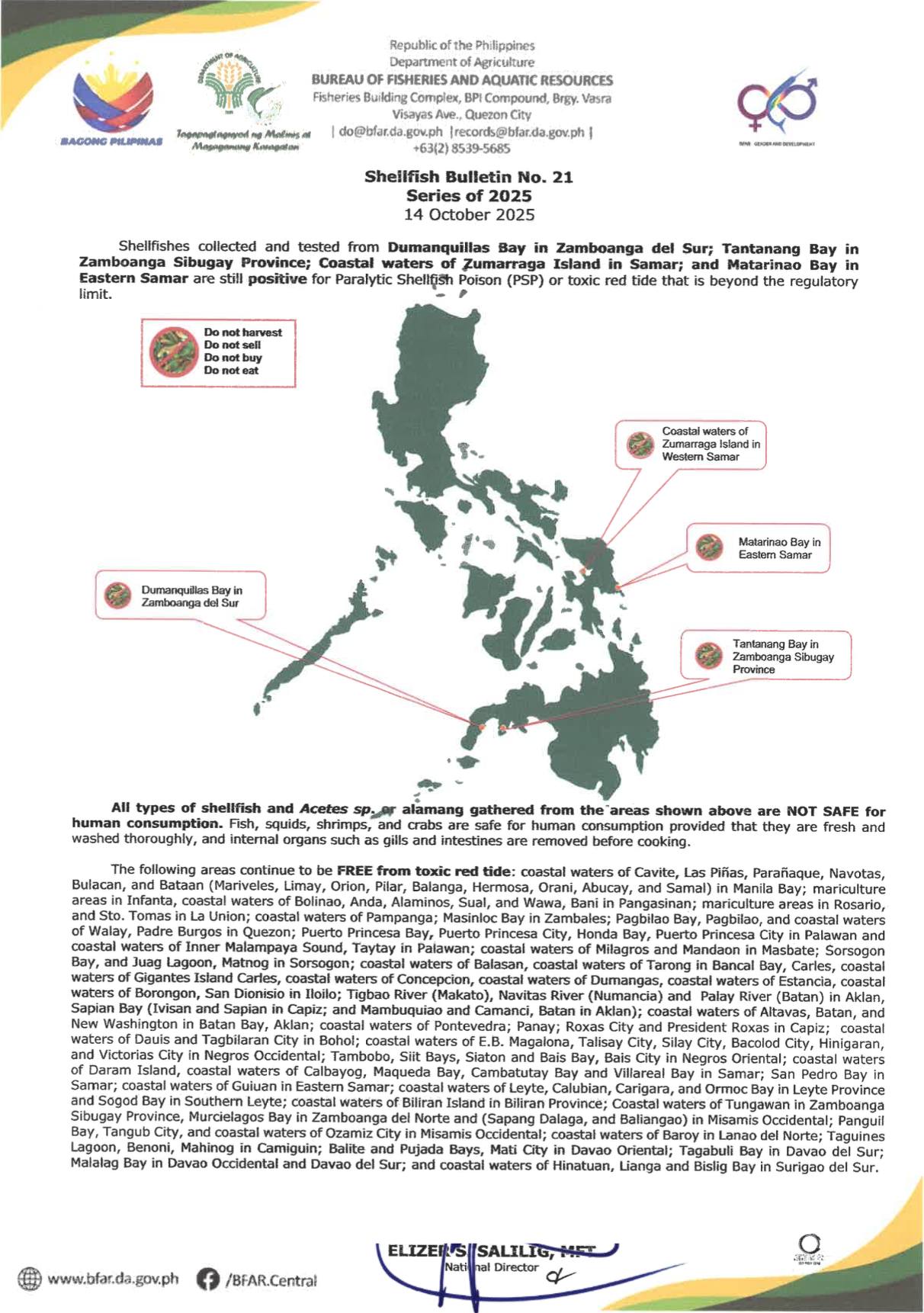
Fisherfolk in Samar and Zamboanga woke up to difficult news this week: the seas that feed their families are again showing signs of toxic red tide. For many coastal communities, this means one thing—no harvesting of shellfish, and fewer earnings for days or even weeks ahead.
In its latest Shellfish Bulletin released on October 14, 2025, the Bureau of Fisheries and Aquatic Resources (BFAR) warned that red tide toxins remain dangerously high in four coastal areas:
-
Dumanquillas Bay, Zamboanga del Sur
-
Tantanang Bay, Zamboanga Sibugay
-
Zumarraga Island, Samar
-
Matarinao Bay, Eastern Samar
According to BFAR, shellfish samples collected from these waters tested positive for paralytic shellfish poison (PSP)—a harmful substance linked to toxic red tide. The levels recorded were above the regulatory safety limit, which means shellfish from these areas are not safe for human consumption.
What is red tide?
Red tide is a natural phenomenon caused by harmful algal blooms that produce toxins. When shellfish like tahong, talaba, and alamang (Acetes sp.) feed on these algae, the toxins build up in their bodies. Eating contaminated shellfish can lead to Paralytic Shellfish Poisoning (PSP), a serious and sometimes fatal illness.
BFAR strongly advises the public not to eat, gather, or sell shellfish and alamang from the affected areas until the advisory is lifted.
However, fish, squid, shrimp, and crabs from these waters remain safe to eat, as long as they are fresh, washed properly, and cooked after removing internal organs such as gills and intestines where toxins may accumulate.
Local government units and fisherfolk groups in the affected regions are being urged to closely monitor BFAR’s updates and help in spreading awareness to avoid food poisoning cases.
In recent years, red tide occurrences have become more frequent due to environmental changes, including rising sea temperatures and nutrient pollution. These events not only affect food safety but also cause serious economic losses in coastal barangays where small-scale fishers rely on shellfish as a main source of income.
BFAR issues regular Shellfish Bulletins based on results of water and meat sampling from different coastal areas. Once the toxin levels return to safe limits, harvesting and selling of shellfish will be allowed again.
For now, residents are encouraged to buy only from verified clean sources and report any suspicious shellfish activity in their areas.
Red tide may be invisible to the eye, but its impact is deeply felt—especially by small fisherfolk who depend on the sea for their daily needs. Until the waters clear, vigilance and caution remain the best protection for our communities.
Pwersa Balita – Your Trusted Source in Agri News