
 By Kenneth Marcos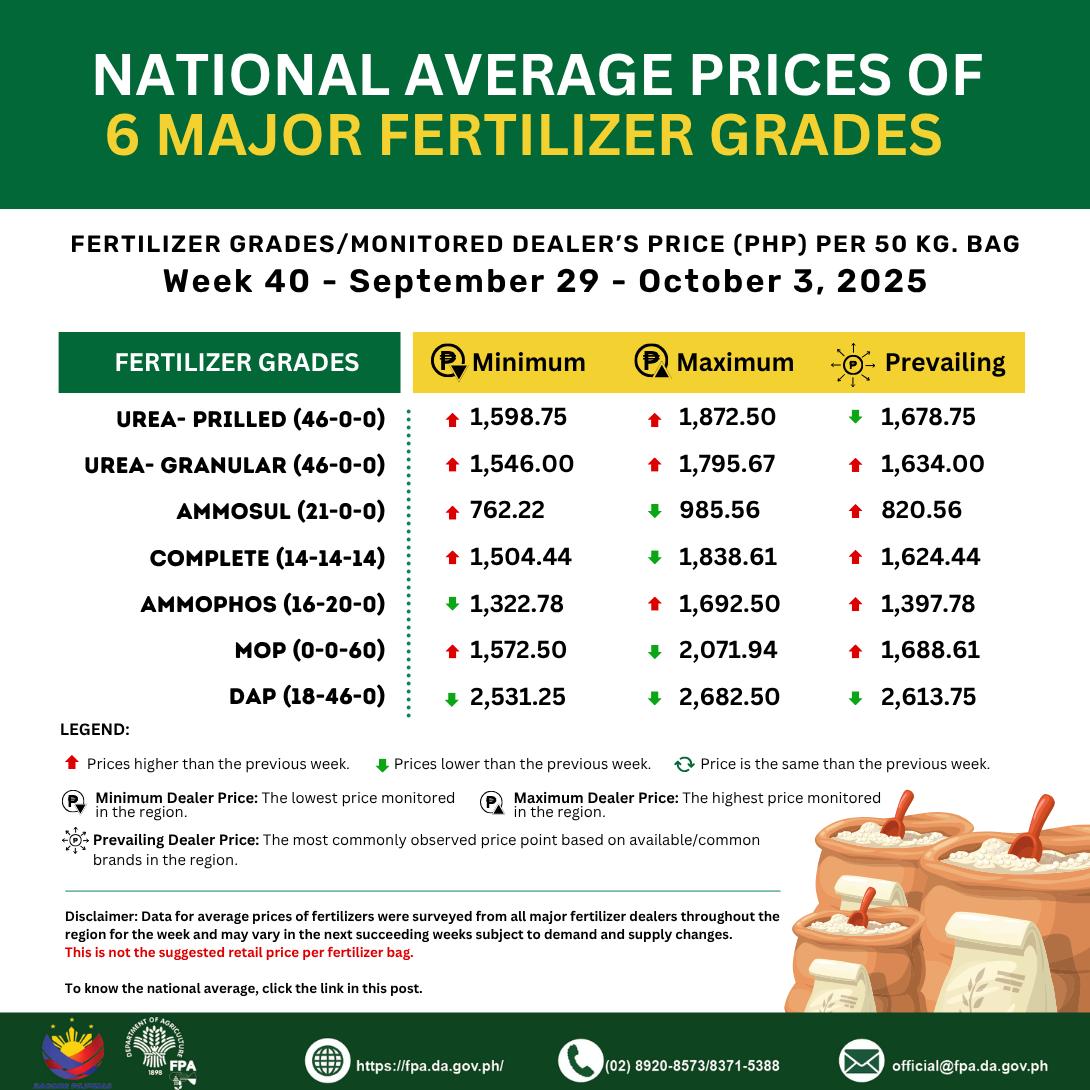
These figures represent trends in supply, demand, and transport costs — but are not recommended retail prices for farmers.
Price snapshot: what’s happening
-
Prices differ by region, reflecting local logistics costs and availability.
-
Some areas saw rising costs, while others experienced slight declines or stabilization.
-
These fluctuations may affect input planning, especially for small farmers who rely on consistent pricing.
Why fertilizer prices matter to farmers
Fertilizers are among the biggest costs for agricultural production. A small price increase can cut into profits or force farmers to reduce usage, which may lead to lower yields.
In past years, the Fertilizer and Pesticide Authority (FPA) has pointed to factors like global demand, import dependence, and transport costs as key reasons behind price surges. Fertilizer and Pesticide Authority Regional price differences also reflect road conditions, distance from ports, and local supply chains.
What farmers and stakeholders should watch
-
Plan for buffer funds in case prices rise further
-
Compare price reports from nearby regions to find better deals
-
Watch for subsidies or government assistance to offset higher input costs
-
Engage with cooperatives or associations to improve bargaining power
Moving forward
As agricultural prices shift this season, the impact may be most felt by smaller farms and those in remote areas. Clear, transparent pricing reports like this help farmers make better-informed decisions.
It is important that both government and private players continue monitoring and managing fertilizer supply and pricing — so that costs don’t derail productivity or farmer profitability.
Pwersa Balita – Your Trusted Source in Agri News