
 By Kenneth Marcos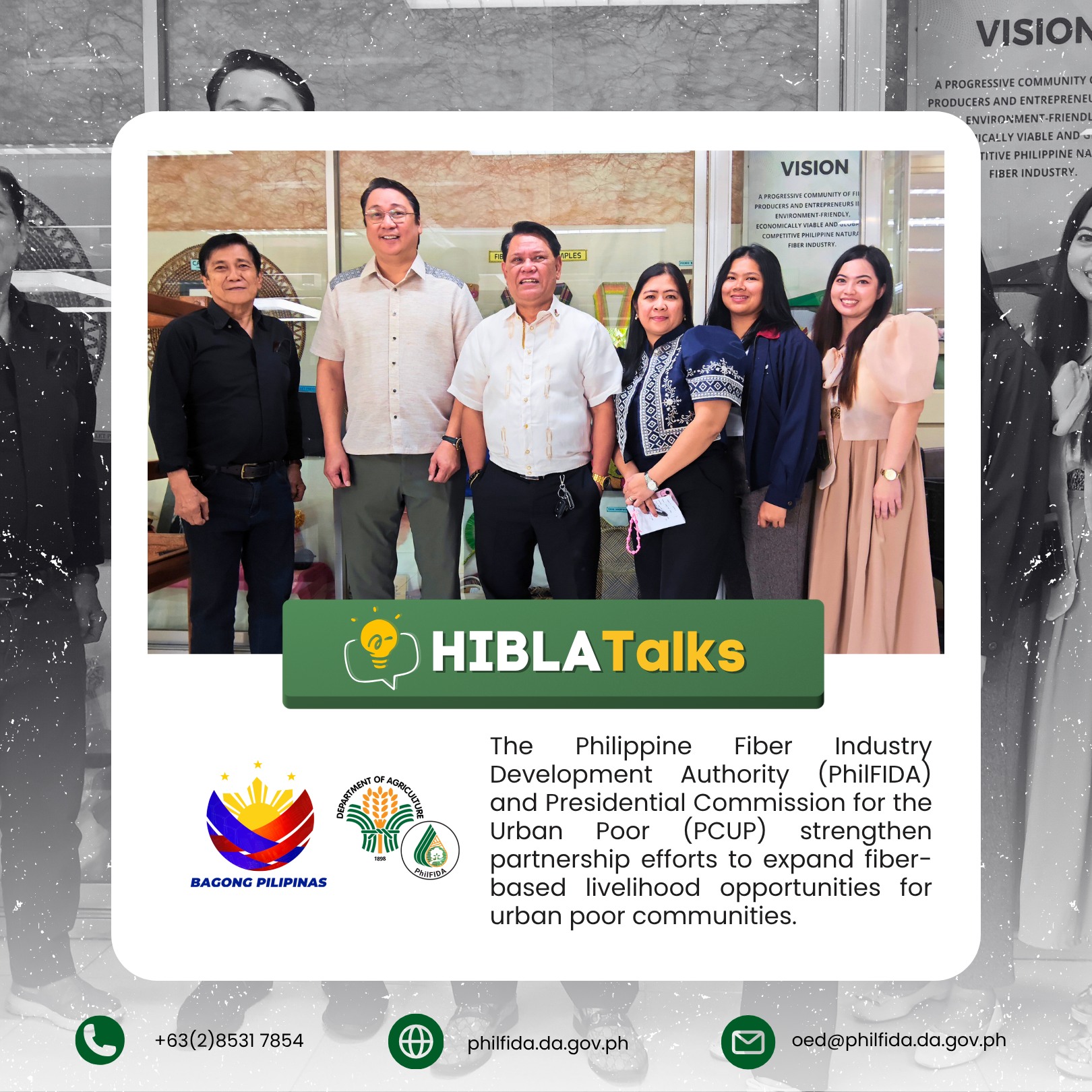
Inside a modest government office, leaders from two agencies sat down with a shared goal—to find new ways to help families in underserved communities earn a living and improve their daily lives.
The Philippine Fiber Industry Development Authority (PhilFIDA), led by Executive Director Arnold “Ali” I. Atienza, met with the Presidential Commission for the Urban Poor (PCUP) to explore possible partnerships that can support marginalized sectors. The meeting focused on creating livelihood opportunities, especially those linked to fiber-based industries.
Officials discussed how programs involving natural fibers such as abaca, bamboo, and other local materials can be introduced to urban poor communities. These industries are known for providing sustainable sources of income, especially for small producers and community groups. By tapping into these opportunities, the agencies aim to help families build stable livelihoods even in densely populated urban areas.
PhilFIDA highlighted its ongoing efforts to promote the country’s fiber industry, which plays an important role in agriculture and rural development. The Philippines is one of the world’s top producers of abaca, a strong natural fiber used in products such as ropes, textiles, and eco-friendly packaging. Expanding its use in community-based enterprises can open doors for more income-generating activities.
On the other hand, PCUP shared its experience in working closely with urban poor organizations across the country. The agency focuses on ensuring that marginalized communities are included in government programs and development plans. By partnering with PhilFIDA, PCUP aims to bring livelihood projects directly to communities that need them most.
The meeting also served as a platform for both agencies to better understand each other’s mandates and identify areas where coordination can be strengthened. Officials noted that inter-agency cooperation is key to delivering services more effectively and reaching more beneficiaries.
Experts say that providing livelihood opportunities is one of the most effective ways to reduce poverty. Programs that combine skills training, access to materials, and market support can help communities become more self-reliant. Fiber-based enterprises, in particular, are seen as sustainable because they use renewable resources and promote environmentally friendly practices.
The collaboration between PhilFIDA and PCUP is expected to lead to pilot projects and future initiatives that can be rolled out nationwide. These may include training programs, community-based production, and support for small businesses using fiber materials.
For many urban poor families, access to stable income remains a major challenge. Efforts like this offer hope by creating practical solutions that can be implemented at the community level. With proper support, even small projects can grow into long-term sources of livelihood.
As the government continues to push for inclusive development, partnerships like this highlight the importance of working together to uplift those in need. Empowering communities through sustainable livelihood is a step toward a more equitable and resilient Philippines.
Pwersa Balita – Your Trusted Source in Agri News